On Bicycle Riding
Summary
- Type
- Letter
- Written
- Place
- Østerbro, Copenhagen, Denmark
- Author
- Michael Baastrup Chang
On Bicycle Riding considers the relationship between intuitive and methodical approaches to painting. Using bicycle riding and the transformation of energy as metaphors, the letter reflects on artistic momentum, external influences, collaboration, and the different working methods behind paintings including Equities and The Man Without Qualities.
Letter
Since I started painting I’ve experimented enthusiastically with different work methods. Two very different approaches have concerned me in particular. My initial approach was to paint based on what I believed was a gut feeling, and with time I developed a second approach which is methodical and much more formalized. The latter has proved extremely valuable holistically – that is, benefitting the overall project, while the ‘youthful passion’, as it were, remains at the core.
Several events of late have given me insight into the complementary nature of these two seemingly contradictory approaches to painting. One of them was a recent e-mail exchange with a Danish Art Consultant, Birgitte Riis. Ms. Riis had posted an article in an online forum which resonated with some of my own texts and she was encouraging me to participate in the online debate. I seem to get imbalanced when I post comments in online forums – something I’ve been giving quite a bit of thought to since I left the artreview.com community website and now-closed Ning! website created for the Exquisite Corpse Video Project.
When I sit at my worktable and write, I have a map in front of me which I’ve drawn to illustrate my relationship with the world outside my practice as an artist and a painter. As I was replying to Ms. Riis that I would have to decline, I realized that for me, withholding my opinions from public debate creates inertia; it builds up my momentum as an artist instead of as a debater.
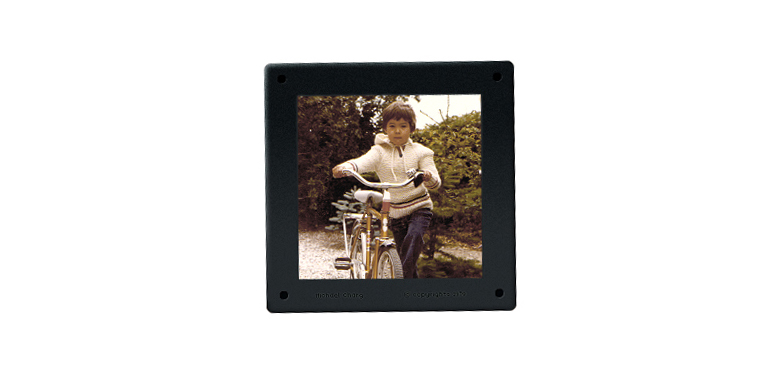
When I had seen that, I recalled something else. In the summer of 2009 I was in Berkeley. I stayed with my friend Marty, whose daughter Mariel was just learning to ride a two-wheeler. Thinking about using inertia to build up the momentum to transform intellectual energy into creative energy, I was seized by the Wikipedia-urge and read this:
”Kinetic energy may be best understood by examples that demonstrate how it is transformed to and from other forms of energy. For example, a cyclist uses chemical energy that was provided by food to accelerate a bicycle to a chosen speed. This speed can be maintained without further work, except to overcome air-resistance and friction. The chemical energy has been converted into kinetic energy, the energy of motion, but the process is not completely efficient and produces heat within the cyclist.”
With these ideas in mind, a link between my two different work methods began to emerge. Gut feeling and a more formalized and methodical work strategy seem to be connected by a dualistic bond; one source of energy is used to fire up the engine and generate a tempo, which, in return, can be sustained with very little effort, at least until the motion is stopped, for example, if one should stop pedaling. (Luckily Mariel was not discouraged, and she can now ride a two-wheeler.)
Thoughts like these explain some of the seemingly effortless experiences I’ve had producing paintings. The painting Equities, for example. I had bought a synthetic-fiber canvas as a sort of experiment: I wanted to explore my affinity for natural flax canvasses. Was it prejudice, or was it the material itself that didn’t resonate with me? It lay in wait for a long time, leering me from the living-room shelf in Store Kannikestræde on a daily basis, I took it down without thinking and began drawing a grid with a felt-tip pen, dividing the plane into tiles. After sketching out a division of each side of the canvas I began filling the spaces with a mixture of graphite and linseed oil. It all happened quite simply, as if it had gathered the energy it needed while eyeing me from the shelf.
I used a different method with the multi-panel painting The Man Without Qualities. Here, in retrospect, I was riding the bike, using a series of instances to build up and maintain the speed, or momentum if you will. This particular group of paintings started out as numerous sketches dividing a plane, which became larger drawings, thus giving me the opportunity to study ideas about scale and sequencing and the idea of human size and to work with the concept of 1:1. I worked with the number eight: I explored eight different painting media, eight different brush stroke gestures and seven “virtues or sins” in a 1:1 relationship with a panel that could contain them all proportionally; a larger body, scaled down to fit on a canvas analogous to my own dimensions. A methodical approach with a different outcome.
I am very grateful to have grasped the connection between these two working experiences and the practical application for art of energy changing form. Without the external circumstances: exchanges with colleagues, an event arranged by the art foundation and the feedback I wrote about it; I would hardly have discovered it. As always, we are confronted with the interconnectedness of all things, the importance of sharing our thoughts.
References
Kinetic energy, Wikipedia, consulted in connection with the letter.
Archive Context
On Bicycle Riding was originally written as an email letter to friends. It forms part of a group of letters written around 2010–2011 and subsequently collected under the title On Art.
The individual letters are preserved here as separate archival records in order to retain their individual subjects, dates, references and relationships to the wider artistic practice.