On Work Titles
Summary
- Type
- Letter
- Written
- Place
- Østerbro, Copenhagen, Denmark
- Author
- Michael Baastrup Chang
On Work Titles considers the relationship between paintings and the names assigned to them. The letter examines naming, identity, language, memory and the ways in which titles can distinguish, describe, redirect or expand the experience of a work of art.
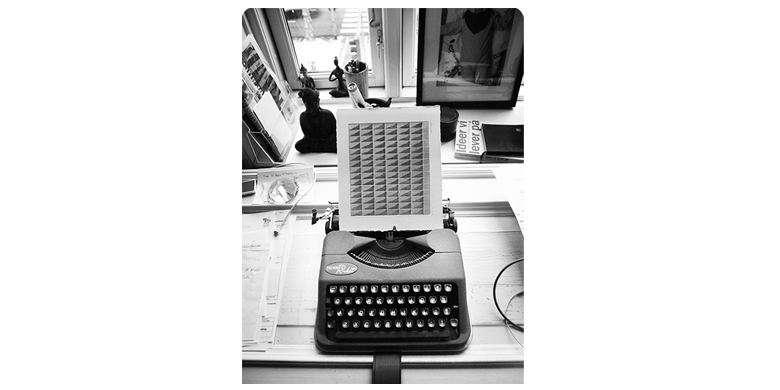
Letter
For quite some time now, working as a painter, I have been concerned with the nature of work titles. I have repeatedly found myself pondering which words I should assign to a painting. I feel that paintings can bear whatever names we choose. Besides the fact that all of us have names, we all have children to whom we have assigned names. Marty, by the time we first met in Hornbæk, your daughter Mariel had already changed her name from Dana to Marie, then reinvented the name by adding an ‘L’ (as I understood it, the ‘L’ was quite simply a character she was fond of?). Mariel claiming her name was something I could relate to. As a child, I adopted the name of a storybook character with whom I identified very strongly, writing the name in all of my schoolbooks. “Who is Paw?” my math teacher would ask. Eventually I grew into the name Michael, motivated by my father’s Korean translation: in Korean, Migil means ‘journey of happiness’. Then there was my invisible friend, Mida. The origins of Mida’s name are beyond my recollection. Mida existed merely because I chose the title: Mida.
What do names do? Semantic signs represent the complex nature of objects and let us use them as linguistic building blocks. Names, and other labels, help us to distinguish one person or thing from another person or thing and single out objects or phenomena from other objects or phenomena. In this context, the work title of a painting helps distinguish one painting from another — or alternatively, refer to another painting. Many cultures use names to denote bloodlines; in Denmark the suffix ‘sen’ means son. So the surname Andersen, as in Hans Christian Andersen, is ‘Hans Christian, son of Anders’. Hansen, son of Hans; Christensen, son of Christian and so on. When all of the strapping young ‘-sens’ were called upon to defend the borders of Denmark against invasion from Prussia and Austria in 1864, there was a lot of confusion about names. Hundreds of Peter Hansens, Hans Andersens, Anders Jensens and Jens Petersens made it impossible to organize an army. To minimize the confusion, the officers, (who were also ‘–sens’) began to address soldiers with the name of their hometowns, and it eventually became a tradition to add one’s hometown as a middle name. My own middle name, Baastrup, is a tiny town in Jutland. In other countries, like Greece for example, nicknames were used to make the distinction between many people with the same name. ‘he who shout’, ‘he who never changes his underwear’, ‘she who takes long baths’. Traditionally, there has been a strong patronymic system in Arab countries for many hundreds of years, meaning that a name can extend to the roots of a family tree.
How do our names affect us? Does Michael limit or liberate me? Who would I be if my name was Untitled? Onomastically speaking, my surname, Chang, links me to my particular history. The work titles of paintings can do the same. Sometimes, a painting can evoke its own name, and its name can in turn create various associations. I once entitled a work of mine Picture of Nodding. It was a long and thin stick painting I later renamed Pica Pica. Looking at it made the viewer nod her head, but it also resembled the black and white pattern of a magpie. And a pica is a unit of measurement. This approach to naming paintings uses words’ pictorial and referential power to keep the internal reflection over the nature of the painting alive. Pica Pica is about exploring something from various angles, up and down, from side-to-side, up close and far away. No single angle will allow you to see the entire painting at once. On occasion, you can slowly sense a title, letting it come to you instead of seeking and deciding – much like growing over time into the name given to you by your parents.
Reading the publication Reception Theory by Robert C. Holub and art theory in general, I was considering, for a while, assigning paintings titles like Work Title or Look at the Painting, not the Title. But I feel that this might detract attention from the sensual experience of a painting. For a short time I tested odd ‘meta-names’ for work titles, but I abandoned them shortly thereafter, feeling perfectly reassured that there would be plenty of more interesting approaches to titles; treating the title in the same manner as the painting, for example. Titles can also reflect theories of art criticism, from formalism via structuralism to deconstruction, iconography, Marxism, Feminism, biography, autobiography and psychoanalysis… White on White; Ceci n’est pas une pipe; Life of the Virgin; Beggar; Interior Scroll; The Painter; Memento Mori; The Physical Impossibility of Death in the Mind of Someone Living. It’s not easy to find an approach to naming works of art that is likely to further both the discourse about art and art theory at the same time – which is, after all, one of contemporary art’s challenges.
This year (2010, ed.), I’ve been working with flags, and flags have given me something new to think about. How can a flag be considered art? Flags are used to send signals; they often evoke strong emotional responses, which was also interesting with regard to the investigative work I’ve done with video about why we respond emotionally and physically to images. One of the triptychs I produced shows three white flags: the Danish, the Norwegian, and the Swedish. Stripped of their colors, the differences in the designs and dimensions of these three very similar flags are revealed. When I was trying to come up with a suitable title, I turned to my family for help. My oldest daughter, Frederikke, and I were walking along the lakes in central Copenhagen on our way to the train one day and had a long talk about what titles do. Although I seldom discuss my work with her, I asked for her input. She was quiet, pensive and in light of her age (13), possibly a little timid to make a suggestion. We were passing under a bridge when she uttered: ‘a lonesome beer’. I had been so absorbed in my own thoughts that I hadn’t noticed the beer bottle she saw standing in the middle of the road, but the coincidence didn’t escape either of us. Coincidence is very much in the nature of art and I should quite like to keep my daughter’s peculiar and inadvertent title for the flag piece. It has a story and even an educational purpose, a meeting between a parent and a child.
There are so many ways to name works of art. I’ll close here, inviting you to share your thoughts on the matter.
References
Holub, Robert C., Reception Theory: A Critical Introduction, Routledge (reprint), 2003, ISBN: 0415291445.
Archive Context
On Work Titles was originally written as an email letter to friends. It forms part of a group of letters written around 2010 and 2011 and subsequently collected under the title On Art.
The individual letters are preserved here as separate archival records in order to retain their individual subjects, dates, references and relationships to the wider artistic practice.