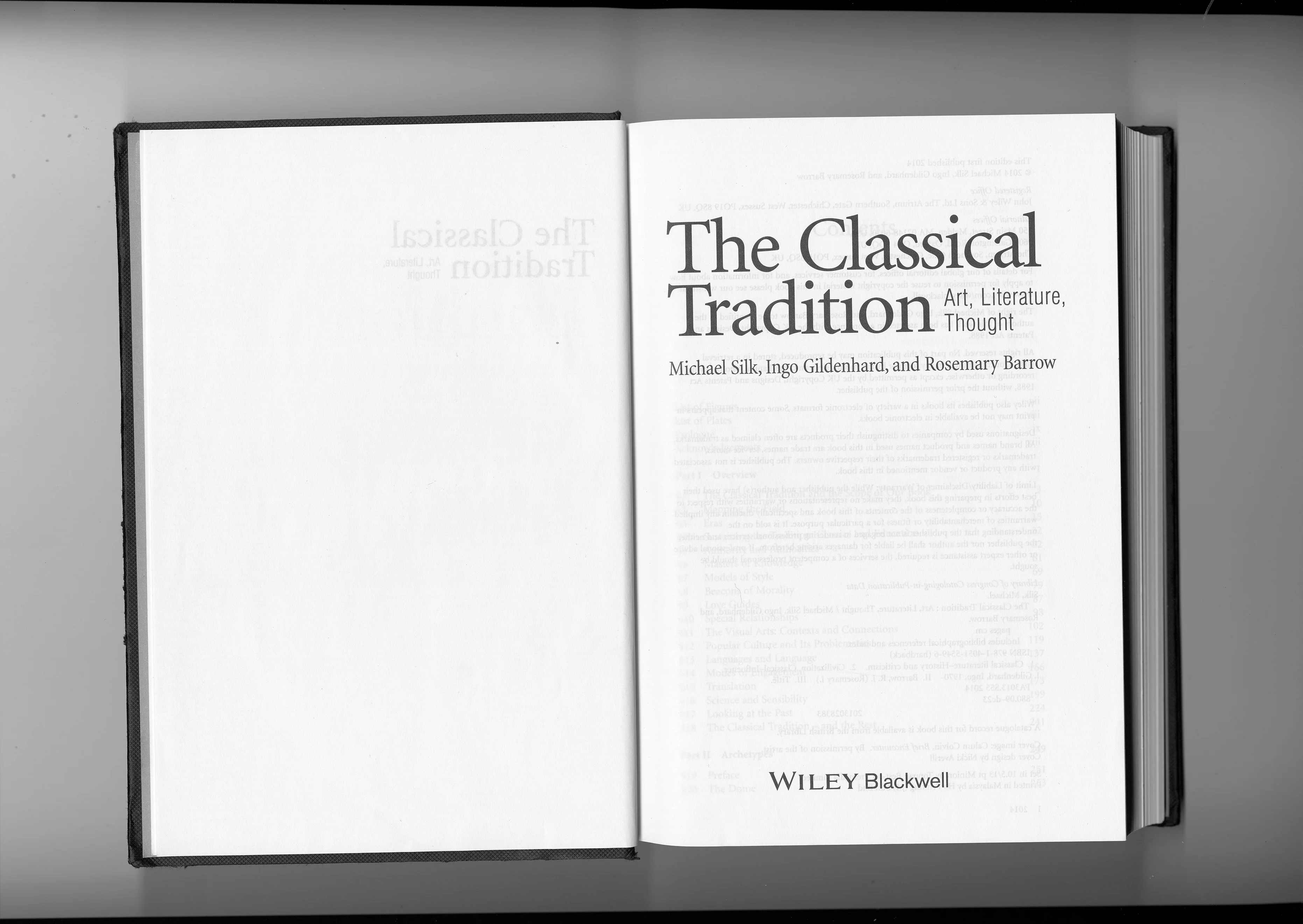
(2013). Title Page. In The Classical Tradition (eds M. Silk, I. Gildenhard and R. Barrow).
The Classical Tradition : Art, Literature, Thought
Authors: M. Silk, I. Gildenhard and R. J. Barrow
[...]
”Of special importance here is Vitruvius use of the human body as paradigm for the ideal proportions of temple structures and his description of the perfectly shaped man ('homo bene figuratus'), who, with arms and legs extended, conforms to the geometry of a circle and a square.* In Fra Giocondo's Vitruvius, the description is illustrated in two separate woodcuts, but some years earlier (1480s?) Leonardo had given 'Vitruvian Man' his most enduring image: a pen-and-ink drawing in which a nude male figure stands in two superimposed positions, with arms and legs apart, simultaneously inscribed within square and circle. In point of fact, this positioning adjusts rather than illustrates the text, as does Leonardo's extension of the arms to a position where the fingertips are level with the top of the head (in Vitruvius the angle is lower, and the arms form lines passing through the navel). As a demonstration of staticity and movement in the human body, however, Leonardo's drawing not only makes a contribution to the quest for ideal proportion in architecture, but becomes a paradigm for figure painting, as well as an endlessly familiar cultural reference.?** ”
[...]
* De Architectura, 3. 1. 3.
** Recent examples: Andrew Leicester's Tin Man (2001) converts the 'man' into a gigantic robotic statue of stainless steel; Michael Chang's installation Vitruvian Woman (2009) uses multiple video monitors to project the female, rather than male, body - anticipated by Australian artist Dorothea Whit's Sex Change for Vitruvian Man (2005). In the popular arena, Leonardo's image features in Hollywood films from Hackers (1995) to Harry Potter and the Prisoner of Azkaban (2004); as iconic symbol (from 2002), on Italy’s 1-euro coin.
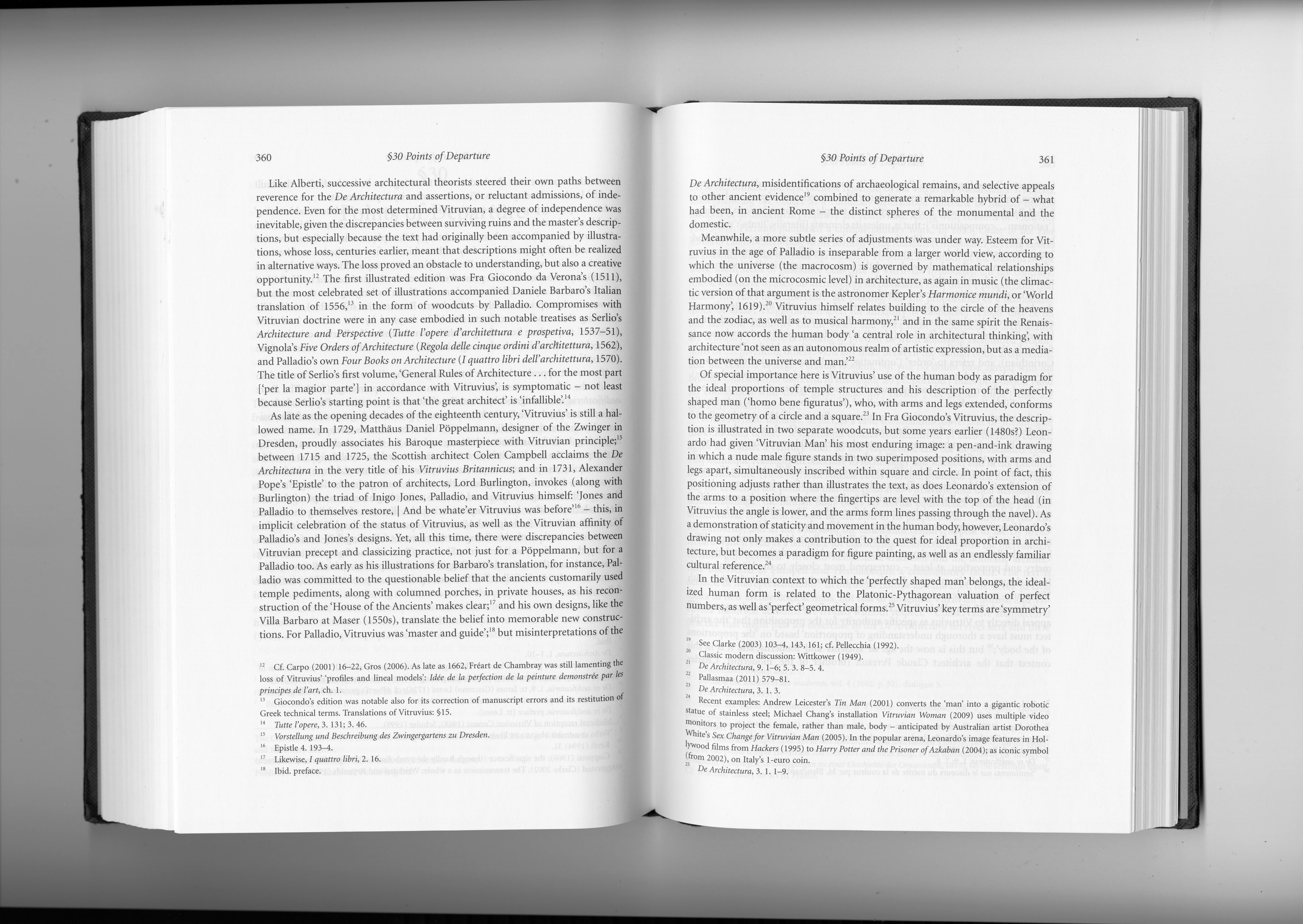
(2013). Chapter 30. Points of Departure. p360-p361. In The Classical Tradition (eds M. Silk, I. Gildenhard and R. Barrow).
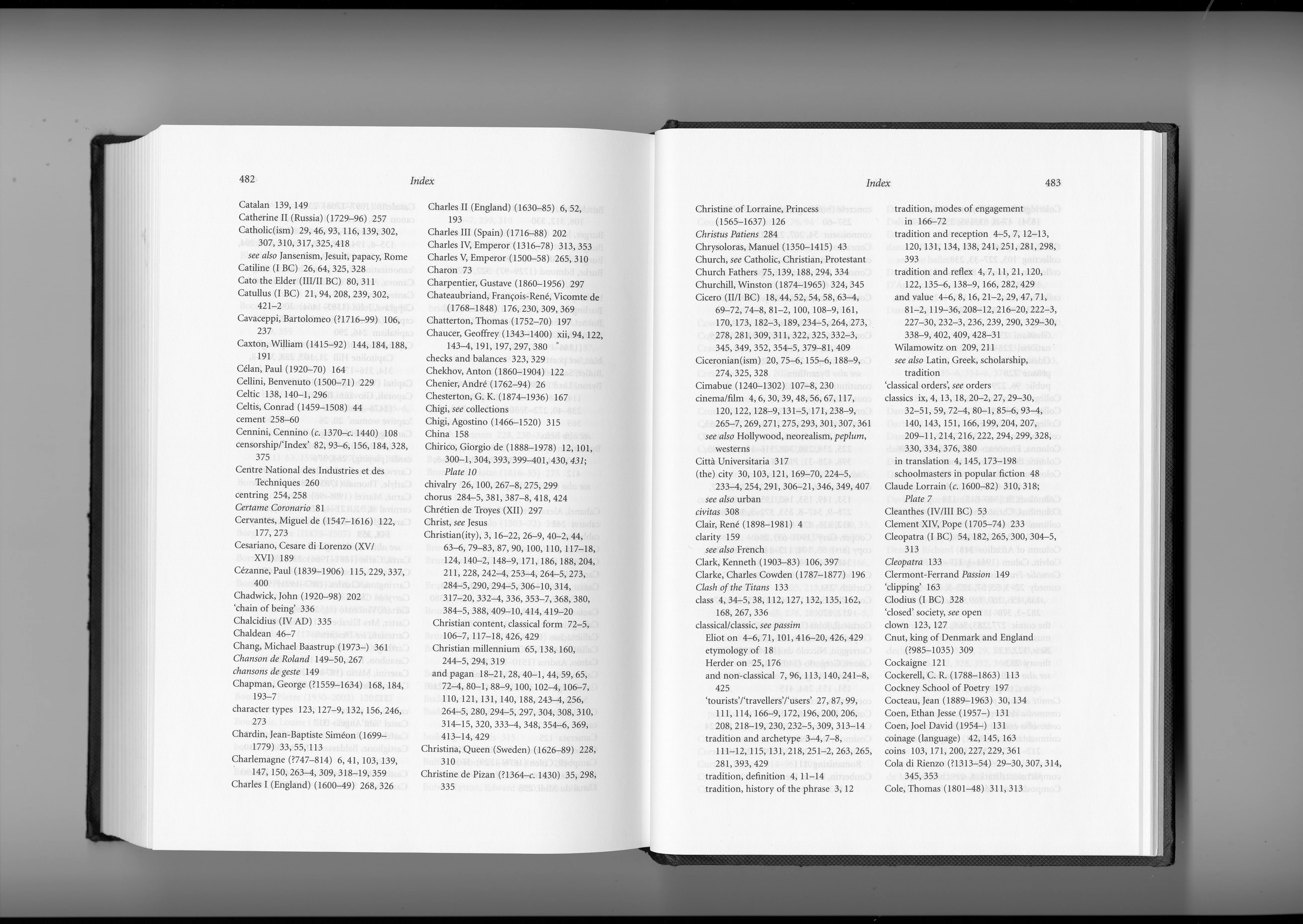
(2013). Index. In The Classical Tradition (eds M. Silk, I. Gildenhard and R. Barrow).