Rejected
Catalogue Text
Trine Ross. MA in Art History, Art critic, writer and lecturer. Published: 2009.
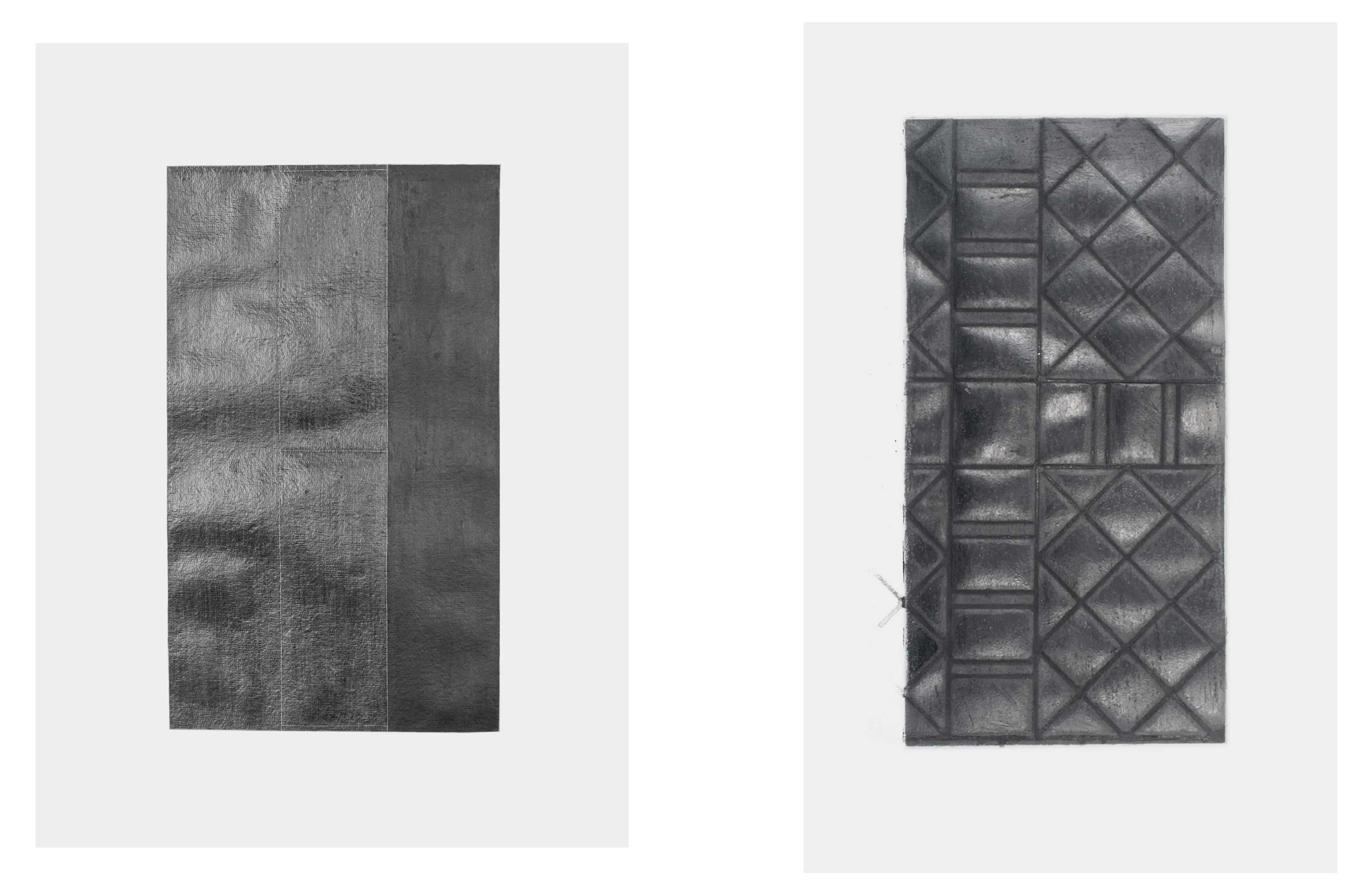
“Rejected” is a strange word.
An arrow can point a driver off the motorway and towards their destination — but rejection can also feel like a slap in the face. We’ve all experienced it: being pointed in the right direction, and being turned away. And we’ve all rejected someone or something ourselves. Most of the time we think of rejection as negative, even shameful. We’ve been weighed and found wanting. We weren’t good enough. We didn’t measure up.
But rejection isn’t always a bad thing.
Certain materials repel each other — with intriguing results. And often, with the sharp hindsight of experience, we realise that a rejection was actually a stroke of luck. You bump into an old flame and suddenly see why that relationship could never have ended well — if it had ever got off the ground. Or, as the English saying goes: when one door closes, another opens. And perhaps that was the door we were meant to take all along.
We’re all constantly making choices, and every choice has consequences. In daily life we may not think much about that, but for an artist it’s different. Artistic choices shape the direction of the entire practice. Michael Chang speaks of a long process of elimination — a series of choices and refusals that have brought him to this point, to where he and his work now stand.
This place was never marked on a map. In fact, he never imagined that this would be how he’d end up working, or that this was what he would want to do. But because he has kept choosing, accepting and rejecting, thinking and sensing his way forward, the artistic place he now occupies feels exactly right. For him. For now. Along the way, Chang has studied art and philosophy from earlier times — from the Byzantine Empire and the Romans to modern art in New York, from Plato and Freud to Heidegger.
But he doesn’t study for study’s sake — the focus is always on the images he’s going to make. Even if he doesn’t consciously think about everything he’s read once he starts working, those ideas form a kind of foundation, a humanist bedrock that gives his work a sense of grounding. So it’s not entirely surprising that one of the pieces rejected by the Spring Exhibition at Charlottenborg can make you think of literal building blocks — though that’s perhaps just coincidence.
In one of Chang’s many notebooks there’s a diagram showing how art moves from the known to the new. He’s drawn two possible routes: one passes through tradition and renews it; the other chases sensation — the completely new, the never-before-seen. But, as Chang rightly points out, just because something is new doesn’t mean it’s relevant. He chooses to build on tradition, and in doing so avoids several of the traps that await those who go down the path of pure novelty.
Focus too much on the new, and you face the constant fear of being overtaken — of not being original or fresh enough. That pressure to keep ahead inevitably comes at the expense of quality. And other artists become competitors rather than colleagues to learn from — something Chang values deeply. His sources of inspiration are as likely to be old masters as young artists working right now at the frontier of experimentation.
The result is a body of work that both looks back to art history and defines itself as a set of open questions. Among the “rejected works” are the four large pieces that didn’t make it through the eye of the needle at the Spring Exhibition, alongside a series of smaller works drawn directly from Chang’s sketchbooks. Here he has acted as his own jury, leafing through the pages in search of those sketches that, as he says, “glimmer”.
Most people could follow him that far. But Chang adds an extra twist to his selection: he has deliberately chosen several sketches he doesn’t actually like. They’re too pretty, too decorative — too superficially entertaining. “They expose me,” he says. Yet he has decided to work with them precisely because he senses they might open a path towards something he’s searching for. In dialogue with the rejected works, these pieces invite viewers to ask the same questions that he asked himself during the selection process: What do I like? What don’t I like? And why?
All the works are made with graphite on paper — an exploration of material as much as of image. The meeting of graphite, linseed oil, beeswax and paper produces a wealth of subtle tones. And nuance is everything, especially when working in a non-figurative mode. Each drawing is done freehand, by eye, using the artist’s own body as a measure — a repeated field might be two fingers wide and one finger long.
In striking contrast to the calm of the finished works is the physical process of making them, which demands energy and strength to press the graphite deep into the paper. On one hand there’s order and carefully defined fields; on the other, the paper lives its own life, adding its own accidents. In some places tiny white specks still show through the graphite; in others the raised fibres of the raw paper have been so compressed that they twist and buckle. Seen up close, Chang’s works contradict the sense of serenity they project from a distance — within the details, small dramas unfold.
And because graphite constantly changes character with the light that hits it, these works are at once precise and in perpetual motion. They catch the light and throw it back. Planes shape themselves in relation to each other, yet remain forever apart. Rejection takes on a new meaning here: to reject becomes an act of reflection — of defining oneself as form against the white of the paper.
Record Summary
- Type
- Catalogue Text
- Published
- Author
- Trine Ross
Archive Context
Rejected was written by Trine Ross in 2009 in connection with Michael Baastrup Chang’s rejected works and drawings.
The text considers rejection as both a practical and conceptual element of artistic practice, discussing Chang’s process of selection, his engagement with art history and tradition, and his interest in the relationship between order, material and chance.
Particular attention is given to Chang’s graphite drawings on paper, including Two Rejected Drawings, and to the physical processes through which graphite, linseed oil, beeswax and paper interact.
The text is preserved here as an individual archival record within the catalogue texts section of the Michael Baastrup Chang Archive.