The Artist As Gardener
Catalogue Text
Trine Ross. MA in Art History, Art critic, writer and lecturer. Published: 2012.
There is an old Chinese proverb that says: He who wants to be happy for a day, gets drunk. He who wants to be happy for a week, slaughters a pig. He who wants to be happy for a year, gets married. But he who wants to be happy for life, becomes a gardener.
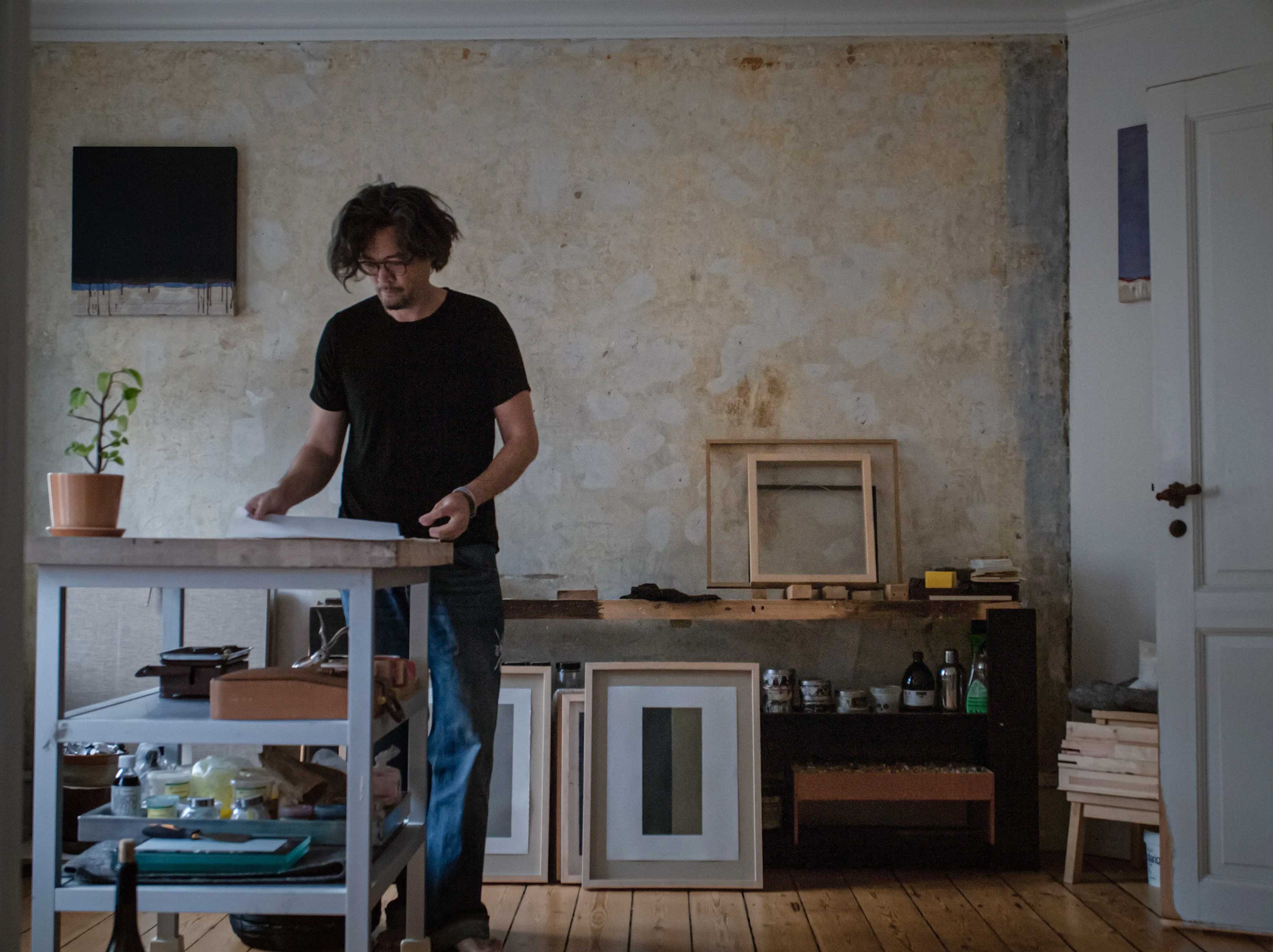
And it is precisely the act of gardening that forms the core of Michael Chang’s practice. Though he is an artist, he nevertheless sees himself as a caring gardener, one who helps his growths along their way. Everything they need, and everything they will become, already lies latent in the seed. Thus, it is solely his task to give these seeds the best possible conditions for growth.
However, Chang's seeds are not planted in soil. Instead, they are hidden within the materials and the thought processes he uses to work on his pieces—both physically and mentally.
But it hasn’t always been this way: until 2007, Chang worked in a very different style, with different expressions and aims. Back then, it was about figuration, technical skill, and what is traditionally called talent. You could also call it mastery—and while an artist must know their materials, overt skill isn't always an advantage.
This led Chang’s artistic practice to take a significant turn—away from recognizable figures and, more importantly, toward an artistic approach centered on exploring painting, materials, and what they do to him and to us. Gone, too, is the hectic and contemporary demand for constant innovation, which has allowed him the peace to rediscover old techniques such as tempera. In doing so, something quite wondrous happens: a completely unforced renewal of visual language emerges. Because even though the technique is thousands of years old, we have never seen it used in the way Chang does.
On a technical level, Chang has also found his own paths, beginning with priming the raw canvas. For this, he uses slaked lime—that is, crushed bones from various animals that lived around Stevns Klint several million years ago. This, to put it mildly, historical foundation is built upon using eggs, which carry equally far-reaching philosophical, symbolic, and very practical meanings. For the egg, like the seed, is the beginning—carrying all of the future in a complete whole—while the whites bind and stick together, and the yolk's lecithin content makes oil and water blend harmoniously.
The technique requires patience. Though the first four layers of alternating lime and egg whites dry in a couple of days each, the tempera takes much longer to oxidize and bond with the surface. Tempera is a mixture of water, linseed oil, and egg yolks, with added selected pigments. To avoid cracking, the canvas must rest untouched for about seven weeks before a new layer of pigmented tempera can be applied.
The many layers that make up each work not only take time— they also yield a wealth of experience. Chang experiments with his brushstrokes, which, in his hands, become a material in themselves. Likewise, he explores his colours, often achieved by combining complementary colours that normally lie at opposite ends of the spectrum. Yet (or perhaps because of this), the result is harmonious, with great depth and subdued intensity in the colours. What emerges is a method that is investigative and almost intuitively scientific, where the artist's ego is no longer central. Instead, Chang makes room for the process, where the work functions on its own—and as a document of its own creation.
Naturally, things sometimes grow the wrong way. There were supposed to be fruits on the plant, but there aren’t, and so the gardener must intervene—must do something different than before, since what he has done so far clearly hasn’t worked. And in that, something new is learned. Other times, things succeed a little more easily—but even then, a work is not guaranteed survival. Occasionally, even well-functioning works must be sacrificed so that something new may sprout in their place. What that may be, and what it might become, Chang does not know—but he ensures clean water and good lighting.
This may lead to large tempera paintings that alternate between manifesting themselves in space and disappearing before your eyes. Or it may result in a series of copper prints that combine multi-generational recipes with eggs and accompanying children’s drawings. In truly exceptionally happy circumstances, Chang may even recognize his own growths in the works of other artists—as is the case with Mette Ussing. Here, a communication has arisen—not just between two artists from different generations and starting points, but also between their works, which seem to have grown in greenhouses that resemble one another.
Together, these growth-works create a new hybrid—whose cuttings one can only look forward to following in the future.
Record Summary
- Type
- Catalogue Text
- Published
- Author
- Trine Ross
Archive Context
The Artist As Gardener was written by Trine Ross in 2012 and considers Michael Baastrup Chang’s artistic practice through the metaphor of gardening and growth.
The text discusses Chang’s transition from figurative painting to abstraction and his interest in traditional techniques, particularly egg tempera, as well as his approach to materials, process, patience and experimentation.
The text is preserved here as an individual archival record within the catalogue texts section of the Michael Baastrup Chang Archive.