Mixed Ground Technique

Research Record
This record documents a painting-ground and paint-application technique developed through studio experimentation beginning in 2011. The Mixed Ground Technique uses factory-primed flax linen mounted in reverse and modified with a thin mineral preparation of slaked lime (læsket kalk), washed/levigated chalk (slemmet kridt), or a combination of the two. The preparation is worked into the weave rather than built as a conventional thick ground, followed by egg-white consolidation. Chalk-stick levelling and light sanding produce a thin, even painting surface.
The painting is made with a thin egg-based emulsion containing pigment, drying oil, egg yolk and demineralized water. The absorbent mineral surface influences the movement and drying of the paint, while extended intervals between layers allow the developing paint film to dry and cure. The finished surface is characterized by a smooth, low-gloss, silky matte appearance. The relationship between the textile support, mineral preparation and paint film is central to the technique.
Materials
Support
- Factory-primed flax-linen canvas
- Wooden stretcher bars
- Factory-applied sizing and primer
Mineral Preparation
Depending on the individual work:
- Slaked lime (læsket kalk), calcium hydroxide, Ca(OH)2
- Washed/levigated chalk (slemmet kridt), principally calcium carbonate, CaCO3
- Combinations of slaked lime and washed chalk
- Chalk sticks
- Fine-grit sandpaper
Binder and Paint
- Fresh egg white
- Fresh egg yolk
- Drying oil, principally linseed oil
- Pigments
- Demineralized water
The exact proportions and sequence of mineral materials may vary between works and form part of the experimental character of the studio practice.
Process
-
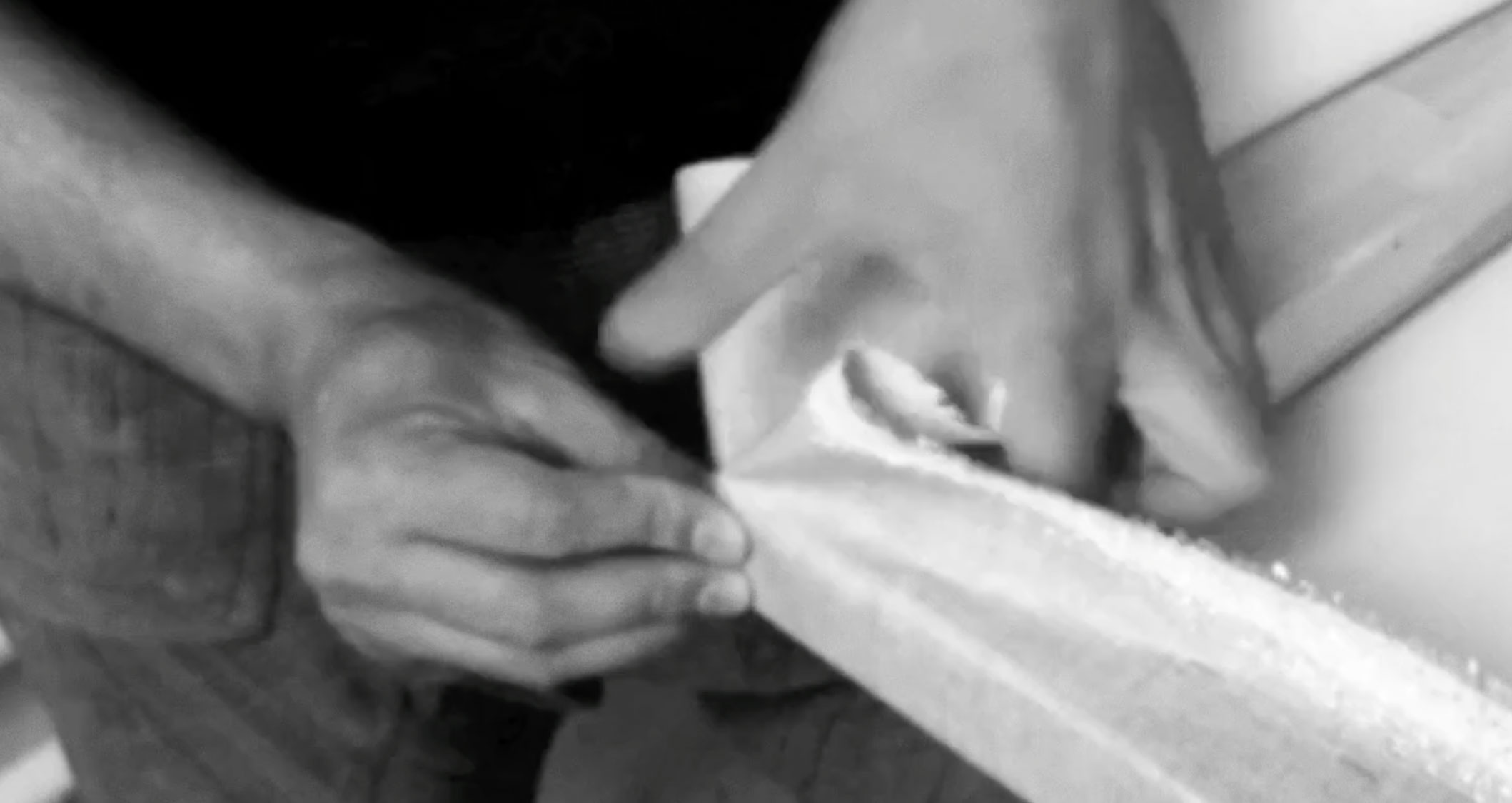
Figure 2. Video still showing factory-primed flax linen being mounted in reverse. Reversed mounting. Factory-primed flax linen is mounted backwards on wooden stretchers, with the originally primed side facing inward and the reverse side becoming the working surface. No additional size is applied to the reverse side before a layer of fresh egg white is brushed over the surface. The layer is allowed to dry for approximately one day before the mineral preparation.
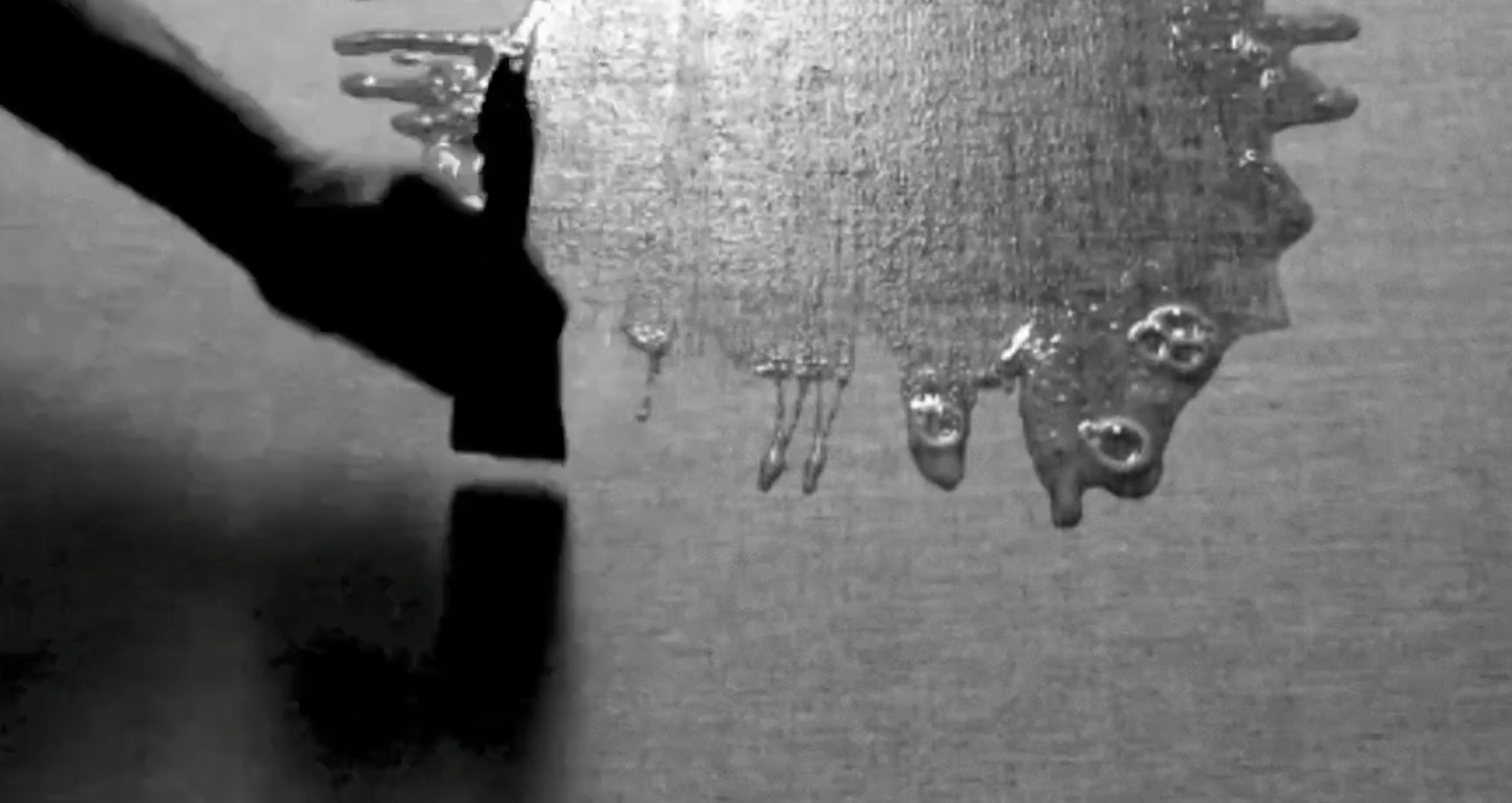
Figure 3. Video still showing a layer of fresh egg white being brushed over the surface of the mounted linen. -
Existing factory preparation. The commercial canvas has already undergone preparation before it reaches the studio. According to information obtained from the art-material supplier, the flax canvas was sized before the application of the factory primer. The existing preparation is understood to reduce absorbency and penetration of the reverse-facing linen and to influence how the subsequent mineral preparation interacts with the weave. The exact distribution and depth of the reported factory sizing have not been established microscopically. The factory preparation is therefore treated as an active part of the material system.
-
Mineral preparation. The mineral preparation varies slightly between works. Some works use slaked lime (læsket kalk), some use washed/levigated chalk (slemmet kridt), and some use a combination of both. These materials are chemically distinct and should not be treated as interchangeable terminology.
Læsket kalk refers to calcium hydroxide, Ca(OH)2.
Slemmet kridt refers principally to calcium carbonate, CaCO3.
The use of both materials in different works forms part of the experimental history of the technique.
-
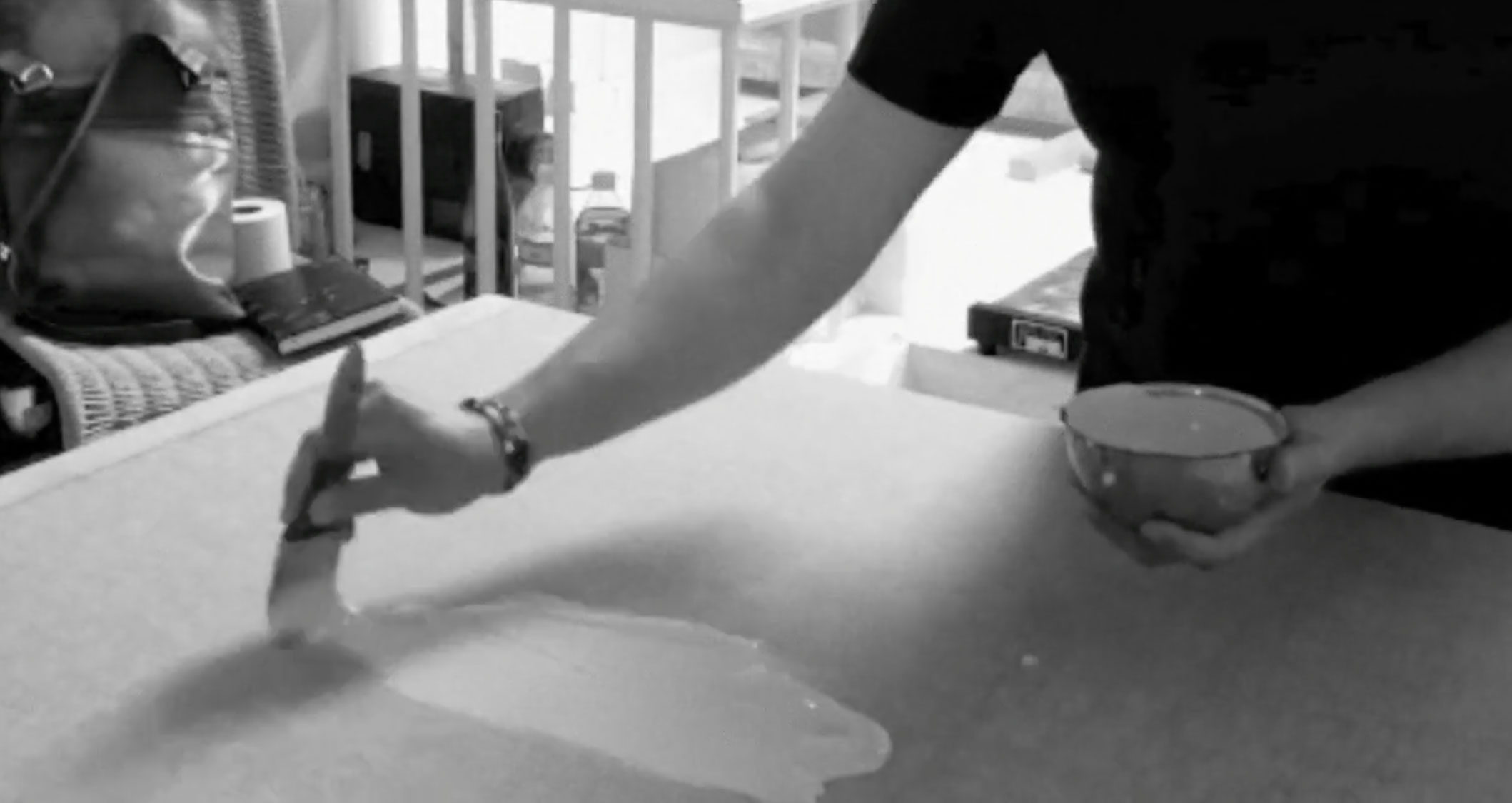
Figure 4. Video still showing the initial mineral layer being applied to the surface. Slaked-lime preparation. In works using slaked lime, the material is obtained as a wet preparation in a container. The material is reworked mechanically before being transferred to a bowl. A thin layer is then applied to the reverse-facing surface of the linen with a brush. The layer is allowed to dry, generally for one day before further surface treatment. After drying, the surface is mineral and somewhat rough. The intention is not to build a conventional thick lime ground but to establish a thin mineral preparation that interacts with the existing textile structure.
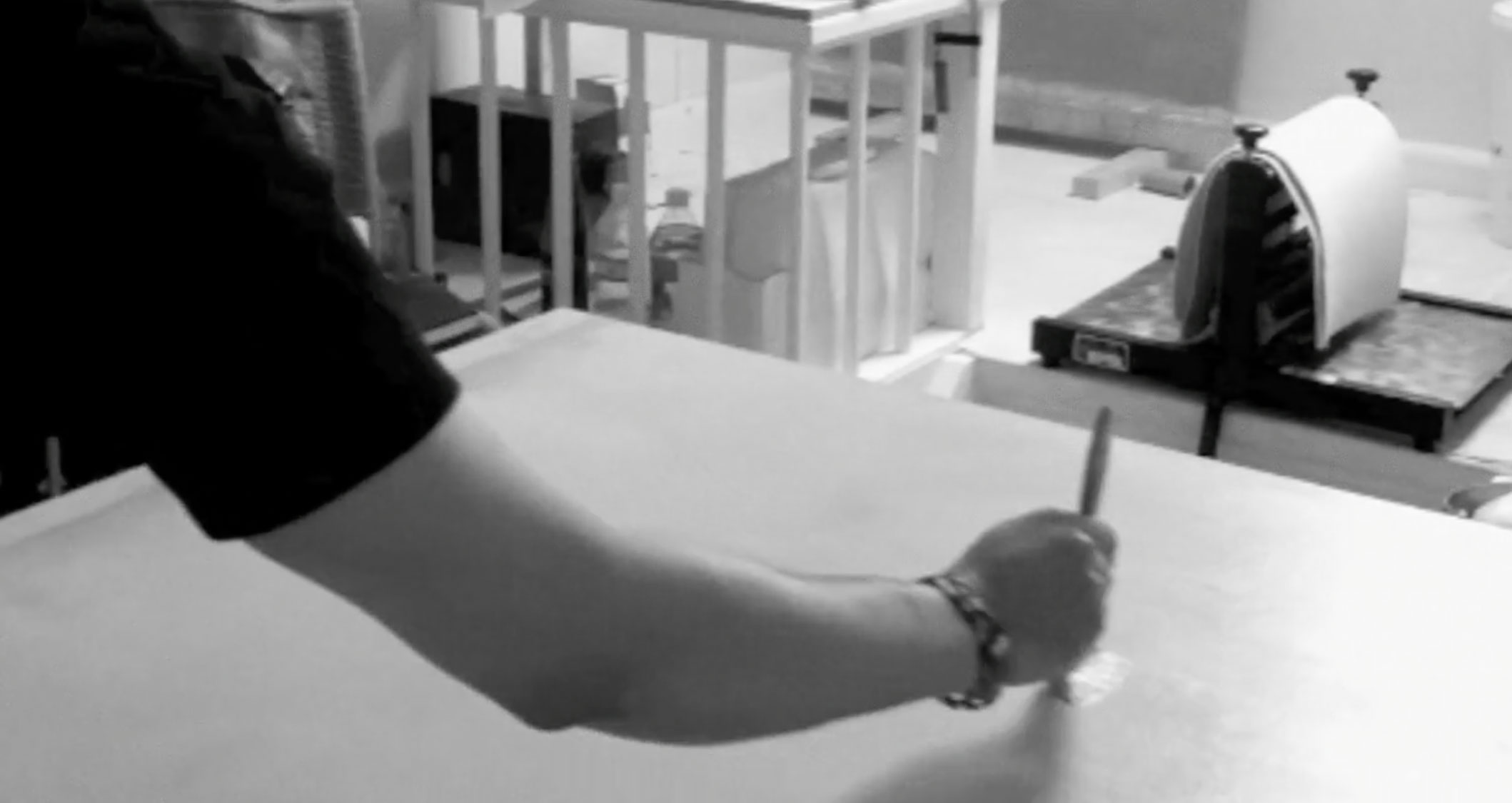
Figure 5. Video still showing the final stage of applying the initial mineral layer to the surface. -
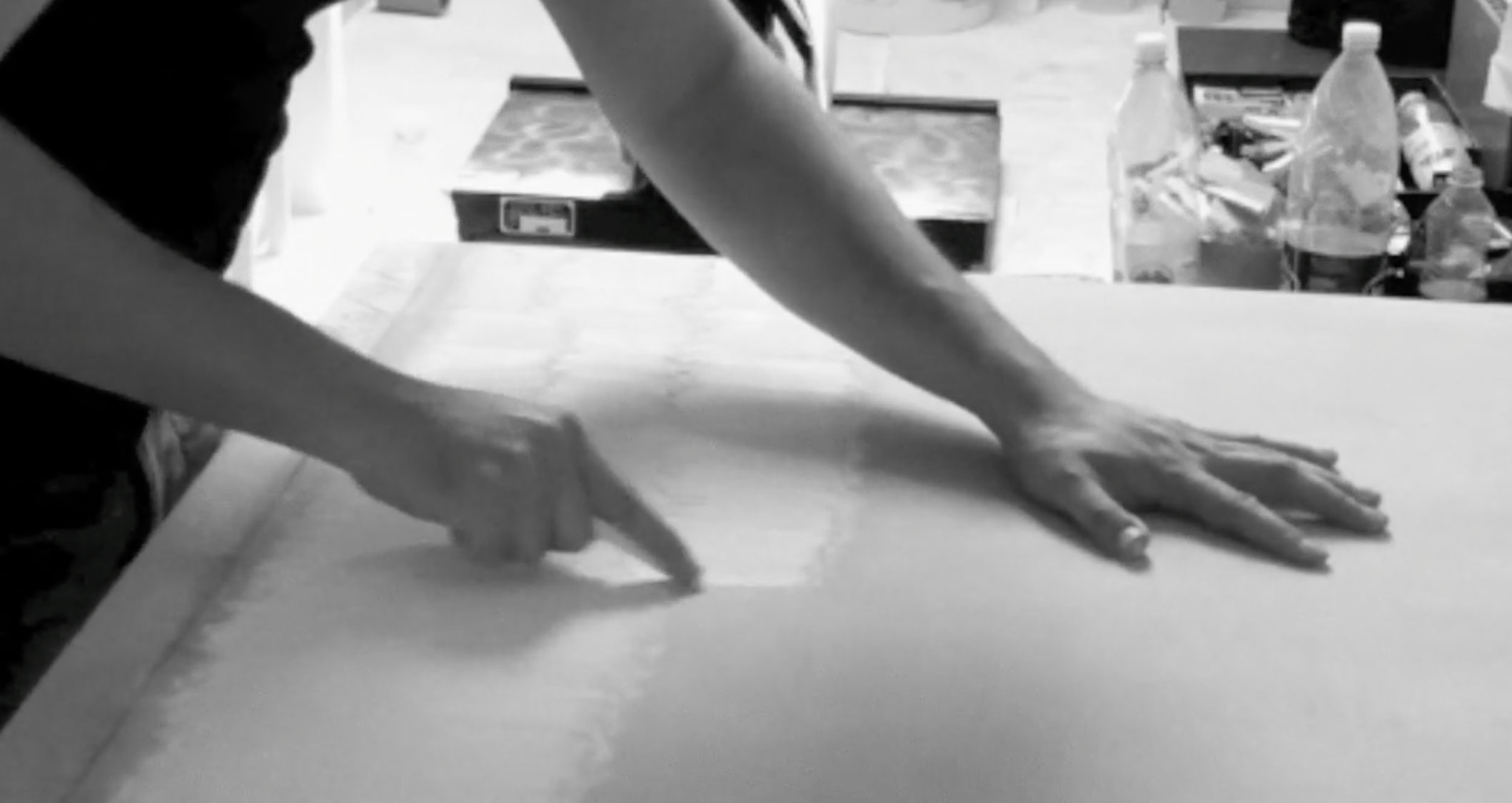
Figure 6. Video still showing the surface being levelled with a chalk stick. Chalk-stick levelling. After the initial mineral layer has dried, chalk sticks are worked over the entire surface. The chalk fills remaining depressions, irregularities and small pockets in the dried preparation. The process produces loose mineral powder while simultaneously helping to even and level the surface. Excess loose powder is removed by hand, including material falling from and around the edges of the linen. The chalk-stick stage is therefore both a filling and mechanical levelling operation.
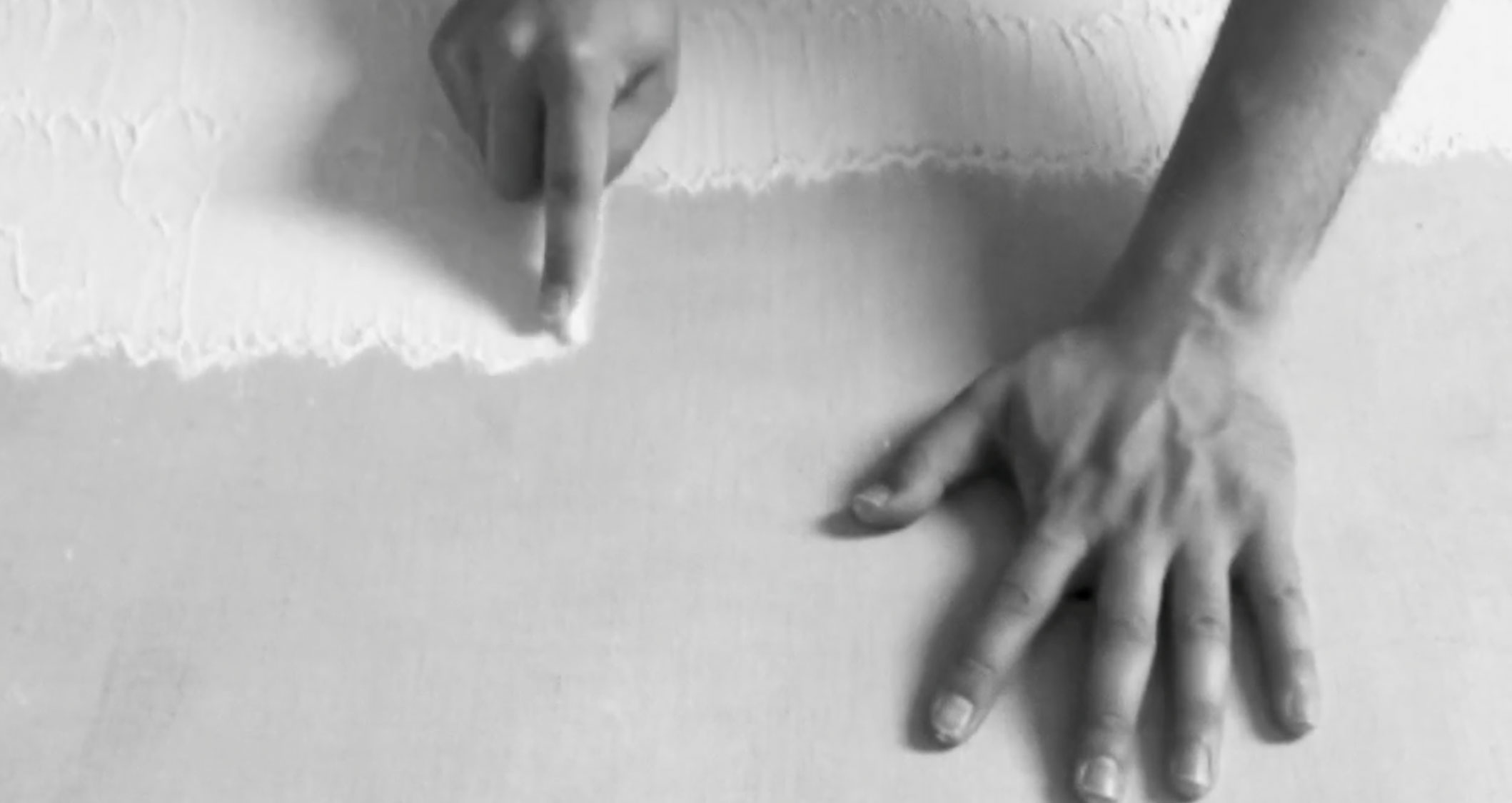
Figure 7. Close-up video still showing the surface being levelled with a chalk stick. 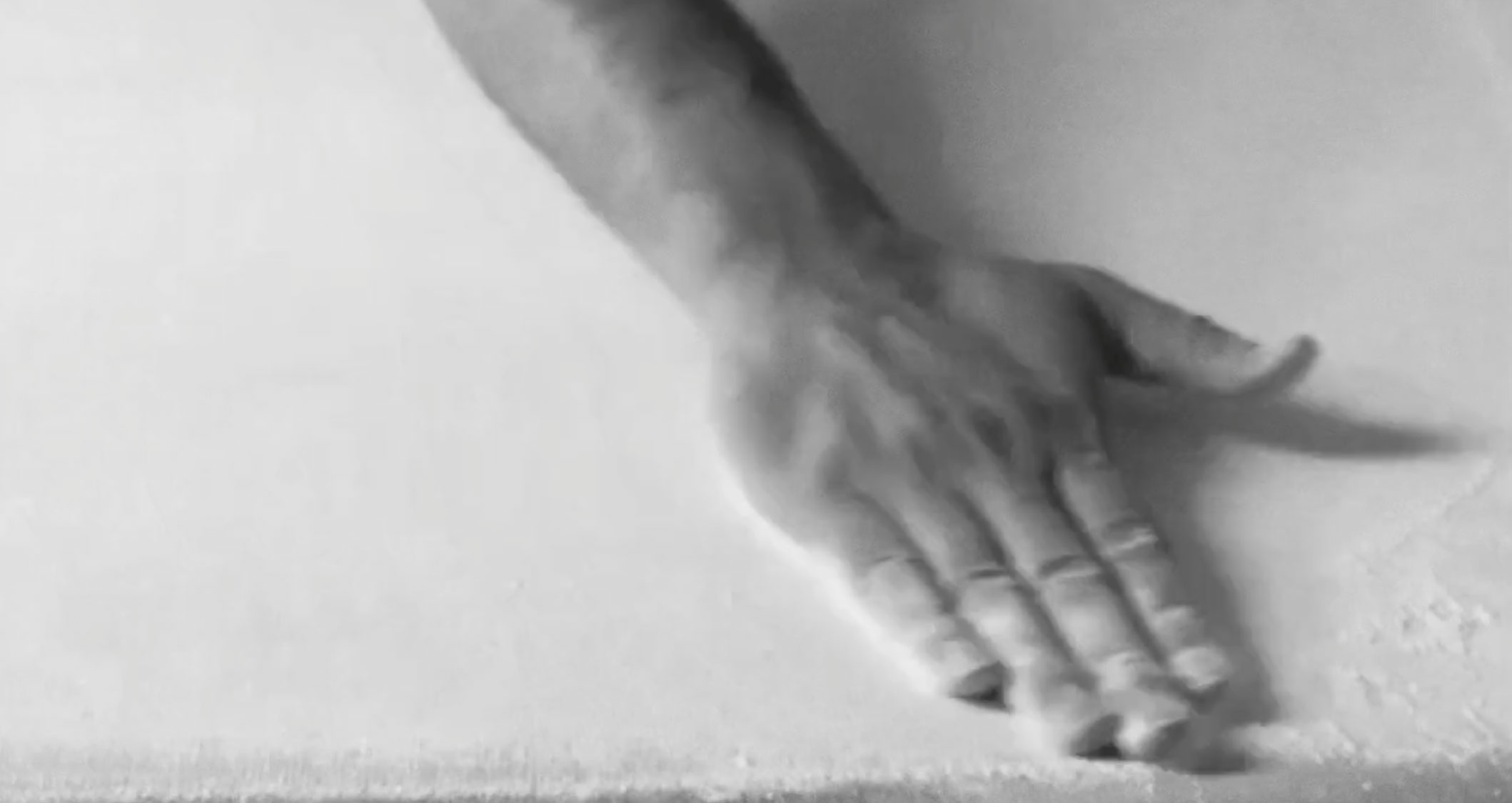
Figure 8. Video still showing excess loose powder being removed by hand. -
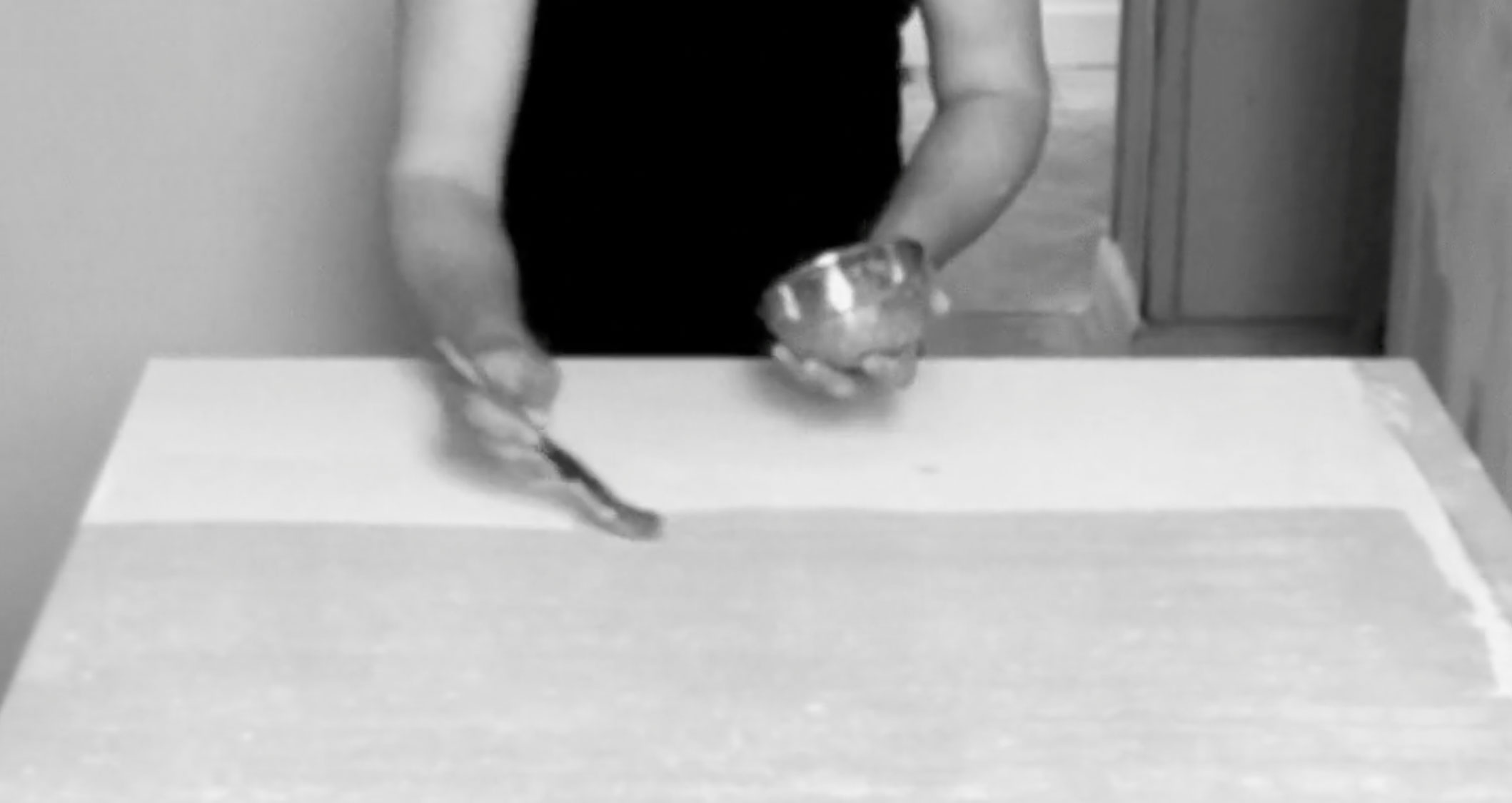
Figure 9. Video still showing fresh egg white being applied with a brush to the dry mineral surface. Egg-white consolidation. A layer of fresh egg white is applied over the dry mineral surface and the sides with a brush. I use, for example, a cat-tongue paintbrush. The layer is allowed to dry for one day before further surface treatment. During drying, the water in the egg white evaporates and the proteinaceous components remain within and upon the mineral preparation. The purpose of the layer is not to create a thick continuous protein ground but to consolidate the fine mineral material and contribute to the formation of a coherent, smooth surface.
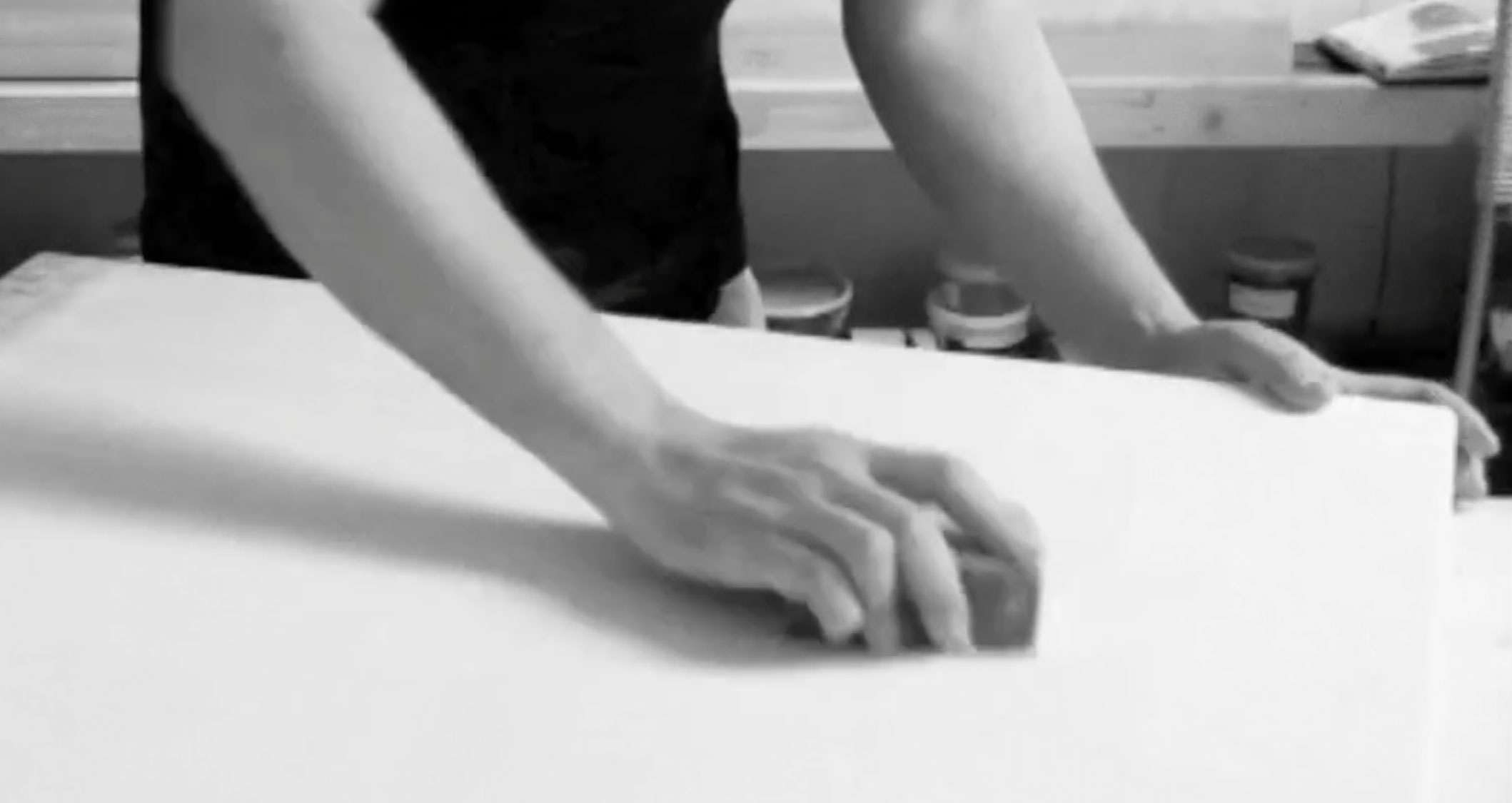
Figure 10. Video still showing the dried surface being lightly sanded with fine-grit sandpaper. After drying, the surface is lightly sanded using fine-grit sandpaper. The surface is subsequently dusted with a soft brush. Small traces of the underlying linen weave may remain visible at very close inspection, but the weave is substantially covered by the thin mineral preparation.
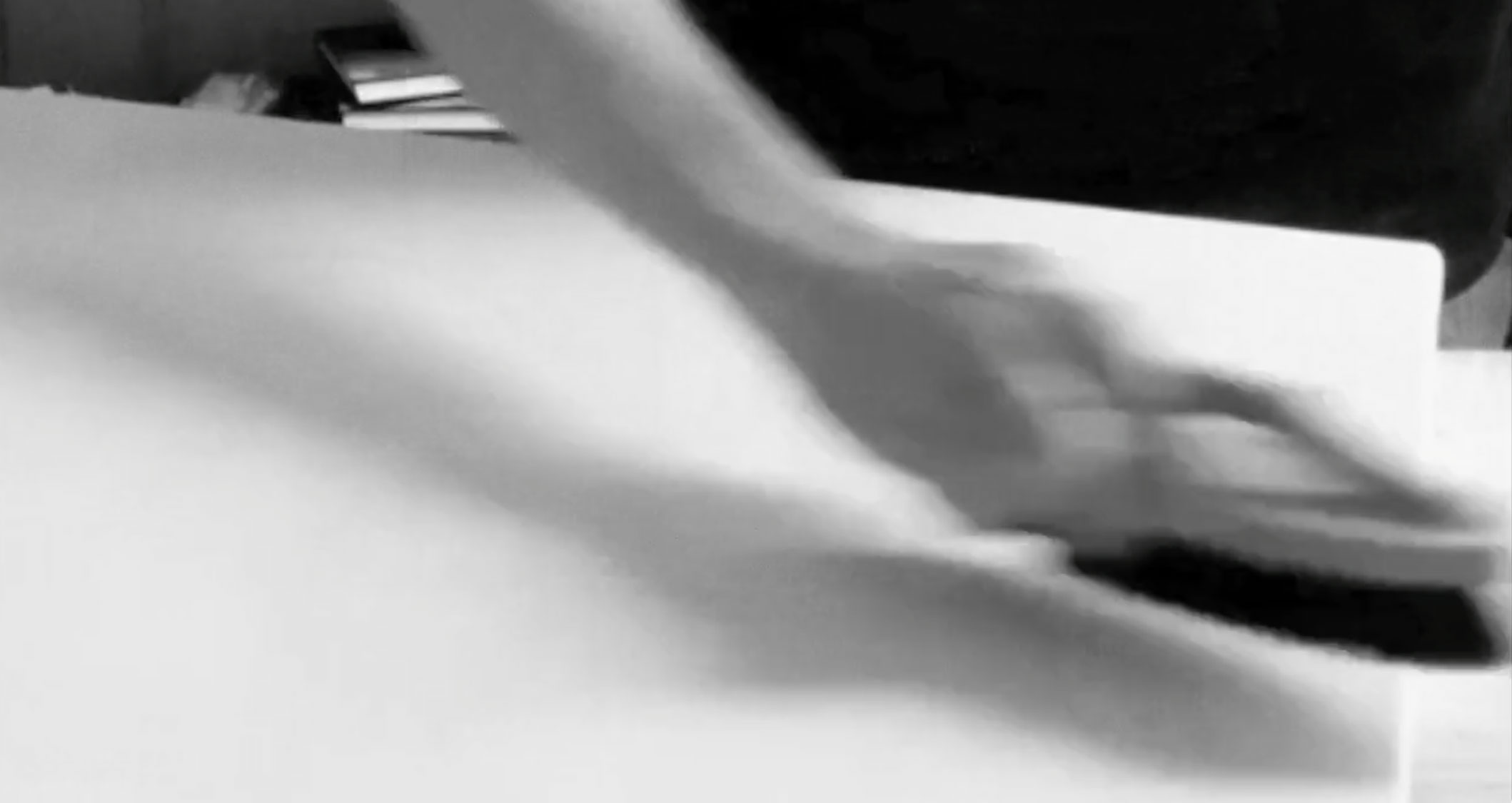
Figure 11. Video still showing the surface being dusted with a soft brush. -
Painting medium. The painting medium is prepared using pigment, drying oil, egg yolk and demineralized water. Egg yolk functions within the oil/water system as part of an emulsion. I use a metal cocktail shaker. The resulting paint contains less oil than conventional oil paint and has a thin, fluid consistency. The paint is therefore not simply conventional oil paint diluted with water. The presence of egg yolk produces a different material system in which oil, water, pigment and egg-derived components interact during application and drying.
-
First paint layer. The first paint layer is applied with a brush (I use a wide nylon hair paint brush) as a thin layer over the prepared mineral surface. The absorbency of the ground allows water from the paint to be absorbed and subsequently evaporated. I have witnessed small drops of water emerge on the surface of the paint layer during the early stage of the drying time. As water leaves the developing film, the pigment and non-volatile binder components become increasingly concentrated. I understand this to contribute to the characteristic visual presence of pigment at the surface and to the low-gloss, silky appearance of the finished painting.
-
Extended drying intervals. Extended intervals are allowed between paint applications. A minimum interval of seven weeks is allowed between layers, although longer periods may occur depending on the circumstances of the work. The purpose of the extended intervals is to allow the preceding paint layer substantial time to dry and cure before another layer is introduced.
The seven-week interval should not be understood as a chemically defined point of complete oxidation or curing. The drying and oxidative curing of drying-oil-containing paint continues over longer periods and is influenced by formulation and environmental conditions. The seven-week interval is therefore a practical studio rule developed through experience.
-
Transition to oil paint. Successive layers of the egg-based paint may be applied at extended intervals. As the painting develops and the underlying layers have sufficiently dried and settled, the paint system can gradually transition toward conventional oil-paint application. The oil paint is prepared by hand in the studio using pigment and linseed oil and transferred to tin tubes for longer storage. The exact point at which the transition is made depends on the individual painting and the artist's assessment of the surface and preceding layers.
Surface Characteristics
The completed surface is characterized by:
- a highly even visual appearance
- very low gloss
- a silky matte surface
- visually uniform optical absorption
- no pronounced dry or sunken-in areas
- a fine, smooth tactile quality
- no prominent visible linen weave
Importantly, the tactile quality is not produced by raised texture. It is a quality of the surface itself and its interaction with the absorbency of the mineral preparation, the paint film and light. The final appearance is therefore produced by the painting system rather than by the addition of a matte varnish.
Material Relationship Between Ground and Paint
The ground and paint are treated as parts of the same material system. The mineral preparation controls the absorption and movement of the water-containing paint, while the composition of the paint influences how pigment, oil and egg-derived components develop within the drying film.
The characteristic surface therefore results from the interaction of support, preparation and paint rather than from any single material or layer.
Long-Term Observations
Paintings made using the technique have now been observed over approximately twelve years, including works created in 2014. Multiple works examined in August 2026 continue to show a high degree of apparent mechanical and visual stability.
- no observed sagging of the canvas
- no observed cracking of the paint film
- no observed delamination
- no observed lifting of the mineral preparation
- continued integration of the mineral preparation with the linen
- stable and even surface appearance
- continued silky matte optical character
- stable edges and edge areas
- no apparent substantial alteration in the visual character of the surfaces examined
Particular attention has been given to the edges of the paintings, where early mechanical or adhesive deterioration might reasonably be expected to become visible. In the works examined, the mineral preparation remains mechanically integrated around the edges and across the edge areas of the linen. The surfaces exhibit a distinctive tactile response.
When subjected to gentle localized pressure, the surface feels firm but has a small degree of compliance, described through studio observation as somewhat leather-like. Gentle pressure testing of selected areas has not produced visible cracking of either the paint film or the underlying preparation. These observations are recorded as practical evidence of long-term stability rather than as proof of a particular chemical mechanism. Only time will tell.
Mechanical Character of the Ground
An important emerging hypothesis is that the stability of the technique may be related to the thin nature of the mineral preparation and its mechanical integration with the linen weave. The preparation does not appear to behave as a separate, thick and rigid ground layer. Instead, mineral material occupies the irregularities and spaces of the textile structure and is consolidated within that structure.
This may allow the completed surface to combine: mineral hardness and smoothness with a degree of mechanical compliance derived from the textile support.
The leather-like tactile response observed in older paintings is consistent with this possibility, although the mechanical properties have not been quantitatively measured.
Calcium Hydroxide and Carbonate
The use of both slaked lime and washed chalk in different works is an important part of the experimental history. Slaked lime is calcium hydroxide, Ca(OH)2. Washed chalk is principally calcium carbonate, CaCO3. These materials should therefore be distinguished when documenting individual works.
In works containing calcium hydroxide, carbonation is a possible long-term chemical process through which calcium hydroxide reacts with atmospheric carbon dioxide in the presence of moisture and forms calcium carbonate.
The extent and significance of this process within the extremely thin, albumen-bound ground used in this technique have not been analytically established.
The present research therefore does not claim that the ground undergoes a specific self-healing process. The historical observation that lime-based architectural materials can undergo moisture-assisted dissolution, transport and reprecipitation, and can exhibit forms of autogenous crack healing, contributed to the artist's interest in lime as a material. This architectural phenomenon should not, however, be assumed to occur in an identical manner within the present painting ground.
In works made exclusively with washed chalk, the mineral component begins principally as calcium carbonate and does not undergo the same carbonation transformation. Works combining slaked lime and washed chalk constitute a third material condition.
Working Hypothesis Concerning Surface Appearance
The working hypothesis is that the unusually low oil content of the paint, together with the presence of egg yolk and water, allows a greater proportion of pigment to remain visually present at the surface. In conventional oil paint, pigment particles are dispersed and wetted by a comparatively oil-rich binder phase. In the thinner emulsion-based paint, a substantially larger proportion of the initial liquid phase consists of water. As water is absorbed and evaporates, pigment and non-volatile binder components become concentrated into the developing film.
The observation suggests that this contributes to a surface in which pigment appears strongly present at the surface rather than visually enclosed within a comparatively oil-rich film. This explanation remains a working hypothesis rather than a complete chemical description of the drying and curing process.
Recent scientific research into egg-containing oil paints supports the broader proposition that egg components can substantially influence the physical organization, drying and curing behavior of oil-based painting materials. The specific behavior of the present formulation, however, has not been experimentally characterized at the molecular or microscopic level.
Technical Principle
The central principle of the method is to transform a commercially prepared flax-linen support into a controlled painting surface through a thin mineral preparation, egg-white consolidation and a water-containing egg/oil/pigment paint. The linen remains the principal structural support, while the preparation fills and levels the weave and the paint interacts with its absorbency to produce the characteristic smooth, silky matte surface. Extended drying intervals between layers form part of the method.
Experimental Status
The technique was developed through practical studio experimentation rather than from an established historical recipe. Its proportions, application methods and material combinations have evolved through repeated use. Individual works may use slaked lime, washed chalk, or combinations of the two. Precise proportions vary and form part of the studio-specific knowledge of the process. The long-term condition observations constitute an important part of the research record. The continued stability of paintings made since 2014 provides empirical support for the practical viability of the system, while not constituting a controlled conservation or accelerated-aging study.
Record of August 2026 Condition Observations
In August 2026, several older paintings made using the technique were examined directly. The works continued to display the characteristic flat, even and silky matte surface, with no visible sagging, cracking or delamination. The mineral preparation remained integrated with the linen at the edges and around the perimeter. Gentle localized pressure applied to selected areas did not produce visible cracking of the paint film or underlying preparation.
The tactile response was firm but slightly compliant, with a response described as resembling leather. These observations were consistent across the works examined and provide approximately twelve years of practical evidence concerning works originating in 2014.
Observational Limitations
The present record is based primarily on studio observation and long-term visual and tactile examination.
No systematic instrumental analysis has yet been performed to determine:
- the precise chemical composition of individual ground layers
- the degree of carbonation in works containing calcium hydroxide
- the depth of penetration of the reported factory-applied sizing
- the microscopic structure of the mineral/albumen preparation
- the precise mechanical modulus or flexibility of the ground
- the distribution of pigment and binder within the paint film
- the extent of oxidative curing within individual paint layers
The technical explanations in this record should therefore be understood as working hypotheses accompanying observations rather than as definitive scientific conclusions.
Suggested Reading
The following resources provide historical, technical and scientific context for aspects of the materials and processes described here. They do not necessarily describe or prescribe the specific technique developed in this research.
-
Ranquet, Ophélie et al. — “A holistic view on the role of egg yolk in Old Masters’ oil paints,” Nature Communications (2023).
Scientific investigation of the role of egg yolk in oil-paint systems, including interactions between egg yolk, oil, pigments and water, and their effects on paint structure and behavior.
Nature Communications — A holistic view on the role of egg yolk in Old Masters’ oil paints
-
Gayo, María Dolores & Jover de Celis, Maite — “The evolution of preparations for painting on canvas in sixteenth century Spain,” Museo Nacional del Prado.
Historical and technical study of canvas preparations and the development of different ground systems.
Museo Nacional del Prado — The evolution of preparations for painting on canvas
-
Antunes, Vanessa et al. — “A multidisciplinary approach to the study of the brightening effects of white chalk ground layers in 15th and 16th century paintings,” Analytical Methods (2016).
Research into the physical and optical properties of chalk ground layers and their influence on the appearance of paintings.
-
Canadian Conservation Institute — Know Your Paintings: Structure, Materials and Aspects of Deterioration.
General conservation information concerning the relationship between textile supports, sizing, grounds and paint layers.
-
University of Delaware, Art Conservation — Ground Preparation.
Historical and technical information concerning painting grounds, including chalk-based preparations and their preparation and finishing.
-
Getty Conservation Institute — Conserving Canvas.
A broader conservation resource concerning canvas supports, grounds, paint layers and the mechanical behavior of paintings on textile supports.
Source Record
The research was originally documented in July 2025.
The record was expanded to Version 3.0 in August 2026, incorporating additional material observations, process documentation, long-term condition observations and working hypotheses.
Version 3.1 consolidated the expanded record, reduced repetition between the overview, process and hypothesis sections, and clarified the distinction between direct observations and technical interpretations.
The present record, Version 3.2, was updated on 21 August 2026 to further refine the documentation and add video stills showing stages of the preparation and painting process.
- concise Research Record overview
- reduced repetition concerning the existing factory preparation
- shortened Material Relationship section
- shortened Technical Principle section
- consolidated the August 2026 condition observations
- retained the distinction between direct observations and working hypotheses
- added video stills documenting stages of the preparation and painting process
Record Summary
- Type
- Research
- Subject
- Painting materials, grounds, paint formulation and surface preparation
- Author
- Michael Baastrup Chang
- Method Developed
- Since 2011
- Long-term Works Examined
- 2014–2026
- Current Record Version
- 3.2
- Record Status
- Published research record
Archive Context
Mixed Ground Technique is preserved as a research record within the archive. It documents material and technical research developed through studio practice rather than a finished theoretical essay or publication. The technique forms part of an ongoing investigation into painting materials, surfaces, preparation methods and processes. The record includes video stills documenting stages of the preparation and painting process, extending the research documentation beyond written description. The long-term condition of the works is now itself part of the research, providing an ongoing material record through which the technique can be observed beyond its initial studio development.